
Published: April 12, 2026

In the final epiosde of our special series highlighting the finalists of the 2026 Franz Edelman Award, members of the team from Microsoft share special insight on their project, which is transforming how global cloud infrastructure is supplied and delivered.
As demand for cloud services continues to grow, the logistics behind delivering the hardware that powers data centers have become increasingly complex. To meet this challenge, Microsoft developed a platform – the Intelligent Fulfillment Service – that combines machine learning, mathematical optimization, and generative and agentic AI to automate global shipment
Supply chains continue to get even more complex, you know, with the tariffs, with the traceability, the shortages. There's almost like in the last few years, every year we've got one or the other challenge and techniques like operations research are going to be, continue to be very important in our supply chain discipline. And with the, added advantage of AI, it's really the combination of these two things I think, will be the norm on how we will be applying, approaching these problems in the future.
Interviewed this episode:
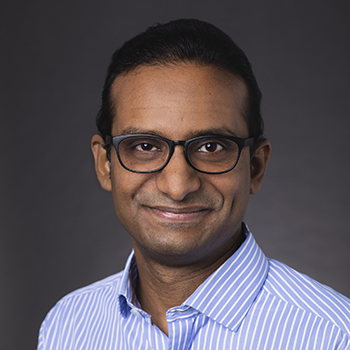
Jeevan Pathuri
Microsoft
Jeevan Pathuri is a Vice President of software engineering for Microsoft’s Cloud Supply Chain, in the Azure Hardware Systems and Infrastructure division. He leads the development of large-scale distributed systems, machine learning, AI, and Agentic platforms for scaling supply chain operations through AI‑driven transformation. He leads cross‑functional teams that integrate advanced analytics, agentic AI, and automation into planning, logistics, and fulfillment systems. Jeevan has over 22 years of experience in software engineering industry with a master’s degree in computer science from Rensselaer Polytechnic Institute and a bachelor’s degree in computer science from San Jose State University. Before joining Microsoft, Jeevan developed complex distributed systems that form the backbone for Amazon’s Worldwide Retail Businesses.

Ishai Menache
Microsoft
Ishai Menache leads the Machine Learning and Optimization group at Microsoft Research, Redmond, with a focus on OptiGuide – Generative AI for optimization and decision intelligence, as well as high-impact initiatives to improve cloud and AI infrastructure efficiency.
Related Episodes



Episode Transcript
Jeevan Pathuri:
I think our supply chains continue to get even more complex with the tariffs, with the faceability, the shortages. There’s almost like in the last few years, every year we’ve got one or the other challenge and techniques like operations research are going to continue to be very important in our supply chain discipline. And with the added advantage of AI, it’s really the combination of these two things I think will be the norm on how we’ll be approaching these problems in the future.
Ashley Klimp:
Welcome to Resounding the Human the Informs podcast. I’m your host, Ashley Klimp, and in this special miniseries, we’re highlighting the finalist for the Franz Adelman Award, which highlights how organizations from around the world are using advanced analytics to solve real problems at massive scale, from retail and logistics to healthcare systems, public services, and the complex networks that keep our world moving. Joining me today are members of the team from Microsoft, whose project is transforming how global cloud infrastructure is supplied and delivered. As demand for cloud services continues to grow, the logistics behind delivering the hardware that powers data centers have become increasingly complex. To meet this challenge, Microsoft developed a platform, the intelligent fulfillment service that combines machine learning, mathematical optimization, and generative and agentic AI to automate global shipment planning. Today, we’ll learn more about how the team brought this system to life. So I’d love to kick things off with introductions.
If you could each please introduce yourselves, including your role at Microsoft and your involvement in this Edelman finalist project.
Jeevan Pathuri:
Thank you, Ashley. Hello, everybody. My name is Jivan Paturi. I’m a VP for software engineering in our cloud supply chain team at Microsoft, just out of the Azure hardware systems and infrastructure team.
Ishai Menache:
Yeah. Hi, my name is Ishai Manasha. I’m a partner research manager at Microsoft Research, and I’ve been working closely with Jivan on the intelligent fulfillment service.
Ashley Klimp:
All right. Now let’s dive into the challenge itself. Microsoft operates one of the largest cloud infrastructures in the world, which requires a massive and constantly evolving supply chain. What made shipment planning for this environment such a complex problem before the intelligent fulfillment service?
Jeevan Pathuri:
It’s really the scale of the business at Microsoft as the demand for cloud continues to increase, it was not possible for us to manage solving the shipment problem manually. And that’s when we had to design the intelligent fulfillment service with collaboration from Isha and Dean from Microsoft Research to introduce mathematical optimization to this problem so that we can scale our solution much better.
Ashley Klimp:
Your solution brings together several powerful technologies, machine learning, mathematical optimization, and generative AI. Can you give us a high level overview of how the intelligent fulfillment service works and how these technologies work together to support global shipment planning?
Jeevan Pathuri:
Definitely. So the core of our problem is to figure out how to send shipments to the right location at the lowest cost and at the fastest cycle time possible and to the right customer. And in order to do this, we collect a lot of information from internal systems about the space, power and cooling available in the data centers, the shipments coming from suppliers, which route for shipment to use either by land, C or air, and putting all of that together close to 20 or 30 constraints together and creating a plan that will make sure the capacity lands on time. And part of that challenge is also the ability to explain what the optimizer is doing and that so we combine the optimization and the AI solutions together.
Ishai Menache:
Yeah. So I think what I would like to add is describe some of the challenges in a nutshell. So while we have familiarity with mathematical optimization, one can think, okay, let’s just formulate the problem, which is on its own a challenge. Because when you start working on that, you understand that some of the business needs, it’s harder to capture in a format of mathematical optimization. But what I’d like to emphasize there is the scale that was huge here. So it’s not like we can take off the shelf solver and get it done with. We had to develop a bunch of the composition techniques, also pre-processing solutions, that together allowed us to come up with a solution that scales for the entire Microsoft cloud fleet, which is a huge scale of millions of variables and constraints. On the GenAI side, I would say that it was definitely a new technology.
And we were, I think, pioneers in bringing these solutions, gen AI solutions together with optimization. So we had to develop on the fly evaluation methodologies as well as figure out the implementation details and making this technology available for production systems.
Ashley Klimp:
One particularly interesting aspect of the system is the LM powered assistant built on the OptiGuide framework, which allows planners to explore scenarios and understand the reasoning behind the model’s recommendations. Why was explainability such an important part of the solution?
Jeevan Pathuri:
Great question. The Optimizer is a complex component as part of our solution and oftentimes the planners need to understand why the Optimizer gave a specific recommendation. So before we had the Intelligent Fulfillment Service Assistant, the process to discover the reason was a collaboration between eight to nine different people, which is to take close to seven to 10 business days to understand the different reasons why certain options were selected versus not. And the assistant cuts shot all of that and gets an answer in a matter of minutes, five to 10 minutes. And what’s also important is that previously by the time the question was asked and the answer was found, during this time, the business would’ve changed so much or something would’ve changed the system, the answer may not have been relevant. So now we actually get the answer when it’s needed and then the planners can spend their time on reacting to the option versus trying to figure out what happened.
So that really, I think was a big game changer. And not only that, we took the core concept behind the IFS assistant and expanded that to other areas in our supply chain, such as planning and other functions. So this ability to use AI to explain complex system decision was actually a good pattern that we expanded in other areas.
Ishai Menache:
Maybe one thing from an optimization perspective, the optimization solutions try to solve or try to model the situation to the best possible. However, it’s often the case that are, like Jim mentioned, that there are a lot of moving pieces and uncertainty that is involved in these processes. So with GenAI, actually one of the main things that one can do is explore a variety of situations, scenarios that are not necessarily modeled right now with the optimization solution and get quantification of outcomes in a fast way, explore different situations and different conditions and come up even with a plan that deviates a little bit from the current one because of this ability to explore and experiment on a quick timescale.
Ashley Klimp:
All right. Now let’s dive into the results. The intelligent fulfillment service has reduced fulfillment planning cycle times from days to minutes and delivered tens to hundreds of million dollars in annual savings. What does that level of improvement mean for Microsoft’s cloud supply chain operations?
Jeevan Pathuri:
Improvement is definitely, in addition to making it easier for the planners to make the business decisions, the cost savings that we get from ensuring we carry the right amount of supply and buffers is really a big business impact.
Ashley Klimp:
And how has the system changed the day-to-day experience for teams responsible for planning and managing these shipments?
Jeevan Pathuri:
Before we had these combined solutions, the data experience was a lot of manual research, bringing the information together, talking to a bunch of teams to get to the answer. And now most of that is now self-service and they can get an answer within a few minutes. And I’ll say the planners can actually spend their time talking to the suppliers on different options available to make the experience go better. I think that’s been a really big impact for our business.
Ashley Klimp:
Let’s talk about collaboration, which plays a huge role in projects at this scale. What did the partnership look like between the data scientists, optimization experts, engineers, and supply chain teams while developing and deploying IFS?
Jeevan Pathuri:
This was a great example of bringing together a lot of different disciplines and expertise to apply to a business problem. I still remember, I think Isha was the one who called us a couple of, now almost three years ago, when GenAI was becoming more prominent, their team had a great idea that we could apply this technique to our optimizer to give more visibility into what it’s doing. Assismo, I think it was a late 10:00 PM call and that we quickly put that into prototype and worked on a few months to get it to production. I think this close collaboration between data scientists, our optimization experts, our software engineers and our supply chain planners really made this solution work for us and it paved the way for a lot of different other areas that we had expanded within our supply chain.
Ishai Menache:
I mean, I should say in general about Microsoft research, a research team is that obviously we have more time to explore and to innovate, to do research and bring it to the product whenever this is relevant. So that’s one advantage maybe and one nice thing about working or collaborating between production and research teams. On this particular case, I should say that our journey actually together started way before GenAI, around 2019 or so where our first goal was to deviate from manual processes to automation and optimization. I think that having developed the optimization solution already tightened the collaboration between the teams and then the GenAI was maybe the pinnacle, the cherry on the cake, as they say, in coming up with this new technology and actually making it work at scale and in a production system. And just something about it’s not to take for granted that a production team dealing with the supply chain with all the challenges and the daily, I would say struggles oftentimes that they will be willing to listen and sit down and looking to the solutions coming off from a research team.
In our case, I think it’s really an exceptional collaboration. I must give credit to Jim and his team for being open and actually even looking at things that maybe will not materialize today, but in a few months and even a year or a couple of years, they would become more relevant. So just being open and listening and staying on top of news technology and research I think is key here
Ashley Klimp:
The France Element Award celebrates analytics that make a real world impact. When people hear the story of this project, what do you hope they take away about the role of AI and operations research in managing complex global supply chains?
Jeevan Pathuri:
I think our supply chains continue to get even more complex with the tariffs, with the faceability, the shortages. There’s almost like in the last few years, every year we’ve got one or the other challenge and techniques like operations research are going to continue to be very important in our supply chain discipline. And with the added advantage of AI, it’s really the combination of these two things I think will be the norm on how we’ll be approaching these problems in the future.
Ishai Menache:
Yeah. So I would say that first we open a window towards cloud resource management and looking at cloud computing as an operation research problem. I think that though the cloud industry is huge, relatively we see less research on the operation research side when it comes to cloud and maybe it’s because arguably that there are a few big players in the hyperscaler case now I think so and we are quite open in sharing so some of our models in terms of optimization models, how we formulate certain problems in the cloud space. So I think it’s an important contribution for the community as a whole far beyond Microsoft. So that’s one thing. I think again, cloud operations, cloud resource management. Second is obviously the GenAI where we came up and again, we have an open source culture that we embrace here at the Microsoft Research. So we came up with the gen AI-based solutions in a project called internally as OptiGuide already came up with a technical report and open sourcing the code itself in July 2023 quite early on.
And we know that there were a lot of follow-ups from other companies, some are public, some are not public and we are actually proud of that in sharing our technology. We kind of understood that in two or three years this technology will become pervasive and we were actually proud and happy to share our innovations and research both in academic venues, talks as well as research papers. So I think again, to sum up, I think it’s the combination of cloud and gen AI for supply chain management.
Ashley Klimp:
And finally, what does it mean to your team to be recognized as a Franz Edelman Award finalist?
Jeevan Pathuri:
It’s a great recognition. It’s an absolute honor to be named as a finalist. Along with the other fellow finalists, we feel like it’s a recognition of the work we’ve been doing over the last few years and the impact it has created to our business. And also like Isha shared before, our focus on making sure that anything that we are learning, we share it with the broader community so that it benefits not just us, but the research area as a whole.
Ishai Menache:
So I think it’s a great recognition for us, which is obviously we are very proud of that the community sees what we’ve been doing in this space. Microsoft is well known for its fantastic software, but maybe less known for excellent algorithmic development operation research and putting into production the state-of-the-art algorithmic innovations together with AI. And I think that this Ellman Award not only is a great recognition, but I think it will expand the visibility into the things that we’ve been doing. And again, our goal is of course to make our services, our operations more efficient, but also to guide and lead when it comes to OR together with AI, lead and set the path for other communities and other industries, other companies to keep evolving and developing this important space.
Ashley Klimp:
Thank you both again so much for joining me and congratulations to you and the rest of the Microsoft team on being named a Franz Ailman Award finalist. I look forward to meeting you in person at the upcoming 2026 Informs Analytics Plus conference where all of our finals teams will present their work during the competition and celebrate the winner at the Edelman Gala. To learn more about this project and other finalist teams, visit resoundinglyhuman.com and to all our listeners and viewers, be sure to like and subscribe wherever you watch or listen to the Resounding the Human podcast.
Want to learn more? Check out the additional resources and links listed below for more information about what was discussed in the episode.
Tags: analytics, Franz Edelman Award, Microsoft