Published: July 20, 2026
Reaching 100,000 downloads isn’t just a milestone – it’s a reflection that the stories featured on Resoundingly Human matter. It means there are thousands of people who are curious about how analytics can solve meaningful problems and who want to hear directly from the people making that happen.
To celebrate, let’s take a look back at our top five favorite conversations from throughout the years. These aren’t necessarily the most downloaded episodes – they’re simply five conversations that challenged our thinking, taught us something unexpected, or perfectly captured what Resoundingly Human is all about.
Interviewed this episode:
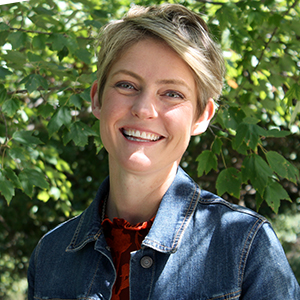
Ashley Klimp
INFORMS
Ashley Klimp has more than a decade of experience in nonprofit communications and public relations, including print, radio, video, podcasts, and web.
As the communications manager of INFORMS, when she isn’t writing, recording, or editing the podcast, she can be found crafting emails, articles, website content, and constantly brainstorming to find creative new ways to connect with INFORMS members and share their incredible work!
Related Episodes


Episode Transcript
Ashley Klimp:
Hello and welcome to Resounding the Human: the INFORMS podcast, where we explore the fascinating ways operations research, analytics, AI, and data science are helping people make smarter decisions for a better world. I’m your host, Ashley, and today’s episode is a little different from our usual format. Instead of sitting down with one of our incredible researchers or practitioners in the INFORMS community, I wanted to take a moment to celebrate a milestone that simply wouldn’t have been possible without all of you. Resounding the Human has officially reached 100,000 unique all-time downloads. When we launched this podcast, our goal was straightforward, make the incredible work happening across the INFORMS community more accessible, more engaging, and more human. We wanted to shine a light on the people behind the research, the innovations changing industries, and the real world impact of operations research and analytics. Since then, we’ve had the privilege of featuring pioneers, students, industry leaders, entrepreneurs, healthcare experts, policymakers, educators, and innovators from around the world.
We’ve explored everything from humanitarian logistics and healthcare optimization to AI, sports analytics, sustainability, quantum computing, and so much more. Personally, hosting this podcast has been one of the most rewarding parts of my career. Every conversation reminds me of just how diverse, creative, and genuinely inspiring the INFORMS community is. I learned something new in every episode, and I hope our listeners do too. Reaching 100,000 downloads isn’t just a milestone. It’s a reflection that these stories matter. It means that there are thousands of people who are curious about how analytics can solve meaningful problems and who want to hear directly from the people making it happen. So before we go any further, thank you. Thank you to everyone who has listened, subscribed, shared an episode with a colleague, appeared as a guest, or supported the podcast behind the scenes. This milestone belongs to all of you. To celebrate, I though it would be fun to look back at five of my favorite conversations from throughout the years.
These aren’t necessarily the most downloaded episodes. They’re simply five conversations that have stayed with me because they challenged my thinking, taught me something unexpected, or perfectly captured what Resoundingly Human is all about. So let’s take a walk down memory lane. Coming in at number five on my list is the December 2018 episode. This was very early into my podcasting career, so I still had a lot of nerves and hadn’t built up a lot of confidence yet, and still very much felt I had no idea what I was doing. This episode marked a turning point when nerves turned into laughs and I saw the real potential in Resoundingly Human to share a personal side of our incredible Informs members in a relaxed and conversational format. I’m going to play a clip from that interview which featured “Santa Claus” who called into the podcast all the way from the North Pole to share the role that OR and analytics play in his annual journey to deliver toys around the world.
Without further delay, I give you Santa Claus.
Santa Claus:
Back before computers, I had to have a whole room full of elves planning all the routing to try to get us there in time. Now, luckily, because of the way the earth turns, I have about 24 hours to visit everybody, and that is plenty of time given how fast my sleigh goes. And these days I can use top quality operations research codes like Concord to solve the traveling salesman problem so that I don’t waste any time in getting around to all the little boys and girls.
Ashley Klimp:
If you haven’t listened to this episode, or even if it’s been a while, I highly recommend checking it out. In addition to Santa Claus, this episode also includes interviews with volunteers, with INFORMS Pro Bono Analytics, as well as representatives from a number of nonprofits who have benefited from this program. All in all, a terrific and heartwarming episode that really captures the beautiful human side of ORMS and analytics. Coming in at number four is an episode called Unraveling the Mysteries of the Batlands. This episode features one of my favorite INFORMS members and a frequent flyer on the podcast, Jim Cochran with the University of Alabama. Jim partnered with an investigative team from Reuters to create a groundbreaking and beautifully realized science series called The Batlands, exploring the origins and potential outbreak sites of bat-borne viruses. Analytics has always had groundbreaking applications in healthcare, but in the wake of the COVID-19 pandemic, the ability to identify outbreaks before they occur has taken on an entirely new significance.
In addition, the award-winning series created by the Reuters team is visually stunning and created on a foundation of lifesaving data to tell a captivating story. So please enjoy this clip featuring one of the Reuters team members discussing the challenge of transforming complex data into a compelling story.
Reuters :
We knew, I think pretty early on that we were going to have to tell this story in a different way. It couldn’t just be a wall of text, 3000 words of zoonotic spillover. And so I think that was kind of the thinking behind this is that we knew from the outset that we were going to have to tell this story differently. And we have just an incredible desk full of talented graphical journalists and illustrators who helped bring the story to life.
Ashley Klimp:
Moving on to number three, this episode features a Baltimore and Informs hometown hero, Sid Mydell, the assistant GM and head of analytics with the Baltimore Orioles. This episode was fun because not only did it come together thanks to collaboration within the informed staff, but pushed me far outside my comfort zone because yay sports, we talked about analytics at the Orioles as well as his own professional journey to an outstanding career in sports analytics. So listen up sports fans.
Sig Mejdal:
I think our goal is, like I said, is to assist the human decision maker as best we can, whatever the decision is, whether it’s the manager and his decision whether to sacrifice bunt, to start this second baseman, whether it’s international signing, whether it’s the American the domestic American draft, whether to promote one of these three guys, all those decisions are being assisted now with analytics and tools created by our team.
Ashley Klimp:
This episode was fun for me in particular because I borrowed Orioles gear from another colleague to wear for the interview and carefully constructed my Zoom background to reflect that I was in fact also sporty with pictures of whitewater rafting as a kid, me on horseback, a running medal, and a couple other sports adjacent references. Bless Sid, he appreciated the effort and made the episode fun and informative for me and for our more sports savvy listeners. For me, the gap separating my number two and number one choice is razor thin, but for very different reasons. Coming in at number two is we’re going to need a bigger data set, shark attacks and wicked problems. To set the stage, I’m going to take us back in time a little bit back to the first time I watched what was to become my favorite movie, Jaws. So fast-forward a couple of years and I’m on one of my morning runs and listening to my newest podcast obsession called Reunion: Shark Attacks in Paradise.
All of a sudden I hear the host mention the totally fascinating academic journal, Management Science. That’s right, the Informed Journal Management Science. He’s referring to an article by UC Berkeley professor Charles West Churchman titled Wicked Problems and proceeds to lay out the shark attacks on reunion as a wicked problem. I took a chance and reached out to Daniel Dwayne, award-winning journalist and author and host of Reunion Shark Attacks in Paradise. And to my amazement and excitement, he agreed to talk about what exactly data science has to do with a series of shark attacks on a small island in the Indian Ocean. So now I give you Daniel Dwayne, low-key data scientist, award-winning journalist, and host of my favorite podcast. This podcast episode contains details of death and injury resulting from shark attacks. Listener discretion is advised.
Daniel Duane:
I did a sort of simple calculation for the California coast, and I think what I came up with was that this was the equivalent of having, I don’t know, was it 125, 150 attacks on the California coast in a single summer and 50 fatalities, just to sort of process the impact on the public mind. I mean, I think we’d be calling in the Navy SEALs. I don’t think American life would just, “Wow, 50 shark attacks. Okay, well cool. Let’s just shut all the beaches in all of California.” Anyway, so that gives you an idea of how it was. So then this raises the question for the society of how do we make sense of this? And that’s kind of what I meant about it was a case study. The real case study here, yes, there’s a case study about sharks, but there’s also a case study in a society facing a very confusing and complicated environmental crisis.
Ashley Klimp:
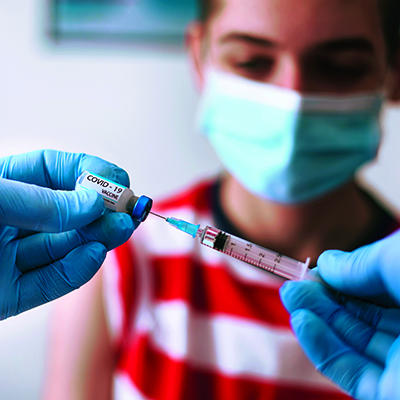
Before we move on, full disclosure, I have a cat called Bruce named after the shark in Jaws. When I say it was close between number two and number one, it was close, but I think it will quickly become clear why I chose my absolute number one episode of all time. As the world began to emerge from the COVID-19 pandemic, we became increasingly aware of the incredible role that ORMS and analytics played in combating this global disaster in every conceivable way, from treatment protocols to testing and vaccine rollout and ultimately how to safely return to a normal way of life. And that’s just scratching the surface. Resoundingly Humanist covered the optimization of testing, mass production, and ultimately the collaborative and lifesaving efforts of university personnel, government officials, and other pivotal decision makers that helped develop innovative methodologies and tools that placed operations research and analytics at the forefront of battle against the pandemic in Chile.
What made this episode all the more memorable was the opportunity to meet the entire Chilean team in person at the 2022 INFORMS Analytics Plus Conference where they competed for and won the Franz-Edelman competition. For me personally, this event captured not only the life-saving impact of the work of INFORMS members, but also the beginning of our emergence from a truly trying time across the world.
Chile:
What I think became really clear with COVID-19 was that it was not only a health issue, it was a biological crisis and a biological crisis needed a different approach to tackle it. So it was not just, for example, the Ministry of Health, it was also the Ministry of Material, it was also the Ministry of Science, it was also the Ministry of Economy. And so it really required that research institutions, private institutions, companies, industry, and the public sector really joined forces to tackle it from the very beginning because it became very clear that the impact was in many different areas of our daily living.
Ashley Klimp:
Looking back at these conversations reminding me why I continue to love hosting Resounding the Human. Every guest brings a unique perspective. Every episode introduces a new challenge worth solving, and every conversation reinforces something I’ve come to believe over the years, that operations research and analytics aren’t just about numbers and algorithms, they’re about people. They’re about improving healthcare, strengthening supply chains, protecting the environment, making businesses more resilient, informing better public policy, and ultimately helping people make smarter decisions that improve lives. That’s what has always made this podcast special to me. To everyone who has joined us over the years, whether this is your very first episode or you’ve been listening since the beginning, thank you for being part of this journey. And of course, thank you to every guest who has generously shared their time, expertise, and passion with us. This milestone belongs just as much to them as it does to the podcast itself.
We’re incredibly excited about what’s ahead. There are many more fascinating conversations waiting to happen, more remarkable people to meet and more stories to tell. So here’s to the next 100,000 downloads. Until next time, I’m Ashley and this is Resoundingly Human, the Informs Podcast. Thanks for listening.
Tags: