
Published: September 30, 2026

Computers keep getting faster. But sometimes, taking full advantage of new computing power requires more than simply speeding up the way we’ve always done things. It requires rethinking the way we solve problems altogether.
Welcome to Resoundingly Human: The INFORMS Podcast where we share how operations research, analytics, data science, and AI are helping us better understand – and improve – the world around us.
Today’s guest has spent his career exploring how we can solve some of the most complex optimization problems more effectively.
A professor at the Jacobs Technion-Cornell Institute at Cornell Tech, Andrea Lodi will be joining us in San Francisco as a plenary speaker at the 2026 INFORMS Annual Meeting, where he’ll explore how GPUs could change not just the speed of Mixed-Integer Optimization, but potentially the algorithms themselves.
I actually heard recently, a colleague of mine was telling me that he was suggesting to his students to spend at least two hours without talking to an agent, so generative AI. And I think actually this is a very good suggestion because we can’t stop questioning. The point is our brain needs to be not only asking questions to your favorite agent, but also actually reading back or listening back to the answers. It needs to process those answers, right? It needs to try to think critically about the answers and try to come up with the right questions, to try to actually prove small things independently just to keep the organ running, in a good way.
Interviewed this episode:
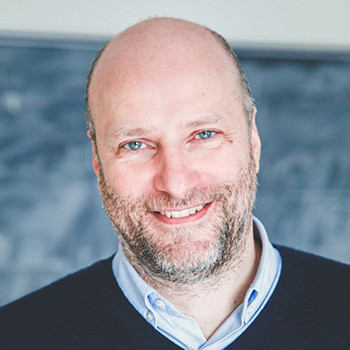
Andera Lodi
Cornell Tech
Andrea Lodi is an Andrew H. and Ann R. Tisch Professor at the Jacobs Technion-Cornell Institute at Cornell Tech and the Technion. He is a member of both the Operations Research and Information Engineering and the Computer Science fields at Cornell University. Before joining Cornell, he was a Herman Goldstine Fellow at the IBM Mathematical Sciences Department, NY in 2005–2006, full professor of Operations Research at DEI, University of Bologna 2007-2015, and Canada Excellence Research Chair in “Data Science for Real-time Decision Making” at Polytechnique Montréal 2015-2022. His main research interests are in Mixed-Integer Linear and Nonlinear Programming and Data-driven Optimization, and his work has received several recognitions including the IBM and Google faculty awards. Andrea is the recipient of the INFORMS Optimization Society 2021 Farkas Prize and has been elected an INFORMS Fellow in 2023. Andrea has been the principal investigator of scientific projects (often involving industrial partners) for Italy, European Union, Canada, and USA. In the period 2006-2021, he was a consultant of the IBM CPLEX research and development team, developing CPLEX, one of the leading software for Mixed-Integer Optimization.
Related Episodes



Episode Transcript
Andrea Lodi:
I actually heard recently a colleague of mine telling me that he was suggesting his students to actually spend at least two hours a day without talking to agent, so generative AI. And I think it’s actually a very good suggestion because we can’t stop questioning. The point is that our brain needs to be not only asking questions to your favorite, let’s say agent, and actually reading back or listening back to the answers, but needs to process those answers. I mean, needs to actually try to think critically about the answers, try to come up with the right questions, to try to actually prove small things independently just to keep the organ running in a good way.
Ashley Klimp:
Computers keep getting faster, but sometimes taking full advantage of new computing power requires more than simply speeding up the way we’ve always done things. It requires rethinking the way we solve problems altogether. Welcome to Resounding the Human: The Informs Podcast, where we share how operations research, analytics, data science, and AI are helping us better understand and improve the world around us. Today’s guest has spent his career exploring how we can solve some of the most complex optimization problems more effectively. A professor at the Jacobs Technion Cornell Institute at Cornell Tech, Andrea Lodi will be joining us in San Francisco as a plenary speaker at the 2026 INFORMS annual meeting, where he’ll explore how GPUs could change not just the speed of mixed integer optimization, but potentially the algorithms themselves. Andrea, welcome to Resounding the Humid.
Andrea Lodi:
Thank you for having me.
Ashley Klimp:
Andrea, I want to start with the big picture. Most of us probably think of a faster computer as a way to do the same things we’ve always done just faster, but your work suggests that a new technology like GPUs could actually change how we solve certain problems. Could you explain what you mean by that?
Andrea Lodi:
Yes. I believe that the right way of putting it immediately is the algorithmic side. I mean, we need new algorithms for exploiting the new architectures, and in particular so far for mixed integer optimization, like you were mentioning before, the type of algorithms that we have been working on mostly are branch bound algorithms, which are inherently, let’s say, exploiting CPUs and so central power units. Instead, recently, graphical power units have been taking a huge stand, especially in the machine learning community in solving much faster machine learning problems. And then the goal for us is actually to use those infrastructure and those architectures also in the optimization, but we needed to rethink about the way in which we algorithmically solve the problems.
Ashley Klimp:
So for those of us, myself included, who aren’t optimization experts, could you give us an example of the kinds of real world problems we’re talking about? Where might someone encounter mixed integer optimization without ever realizing that that’s what’s happening behind the scenes?
Andrea Lodi:
Well, when we routinely switch on and off our lights at home, we are actually in the background that there is actually the way in which the power grid is managed and the power grid is a big complex optimization problem. Of course, there is a lot of, let’s say physics and other things behind the scene, but optimization-wise means that we needed to make sure that the demand of energy is satisfied and we needed to do it in the cheapest possible way. And this is a mixed integer optimization problem in which we need to decide when to switch on and off various sources of energy in order to make sure that this is happening. So we routinely do it every day. Of course, when we drive from A to B in the fastest possible way, we solve an optimization problem that is actually related to traffic and so shortest path.
Everything of this type is actually an optimization problem. So a lot is actually behind the scene of the things that we routinely do every day.
Ashley Klimp:
Well, I will never think about turning lights on and off the same way again. I have a brand new appreciation for what beforehand was just a simple task. Very
Andrea Lodi:
Good. Very, very good.
Ashley Klimp:
That’s what I love about these interviews. I always learn something new. So we hear about GPUs all the time now, particularly in conversations about AI. What makes them interesting for optimization? What can they do differently from the computers and methods that we’ve traditionally relied on?
Andrea Lodi:
Well, this is an excellent question, especially because we don’t have an answer. I mean, it’s a very active area of research. CPUs have been around for quite a while, and algorithms that we have developed over the decades are exploiting them, even if the parallelism that many CPUs at the same time can give even in that case is not perfect. And from the algorithmic standpoint, we know that GPUs are extremely parallelizable in the sense that they contain a lot of different cores that can do very, let’s say simple operations in highly parallelism. And they have been all over the place helping machine learning to actually achieving the results that AI in general, achieving the results that we are experiencing now. And so the question that my research is try to answer and many other researchers like me are trying to answer is indeed how to exploit that parallelism in the best possible way.
Ashley Klimp:
So one of the big ideas in your work seems to be finding ways to solve many pieces of a problem at the same time instead of working through them one by one. Why could that make such a difference?
Andrea Lodi:
I mean the combinatorial space. So when we solve the mixed integer problems, it means that the decisions we have to make are discreet. So we have to decide in the easiest cases, either I do something or I don’t do something. And the discreteness introduces a complexity that makes the space of solutions that we have to explore extremely large and what we call is combinatorial explosion. So enumerating those solutions will not be possible and in reasonable times. So times let’s say definitely not for a human to wait for that, but not even from the point of view of the age of the universe. So that’s not going to happen. And so we need parallel computing in order to actually try to explore many solutions at the same time and then making our algorithms more effective and more scalable for problems that are very hard.
Ashley Klimp:
So something else that caught my attention is the role machine learning could play in all of this. We often hear about AI and optimization as separate approaches to solving problems. How are you bringing those two worlds together?
Andrea Lodi:
Well, I mean if they ever been separate ways of solving problems, they are not anymore for sure. In the last decade or so, probably a little bit more, we have been experiencing the fact that for real world applications, but in general, we needed to use learning and optimization at the same time in order to achieve the best possible results. So this is what we call the data-driven optimization. So we needed to use the data to understand which kind of algorithms we needed to apply in the best possible way. So nowadays, I don’t think any one of us is thinking about these two disciplines as a separate at all. And of course the data is the fuel of the current, let’s say, era and has been the same thing for a while. And without machine learning and without AI in general, we cannot be able to actually make sense of that data in an effective way.
So definitely optimization needs that. And by the way, machine learning needs optimization because at the end of the day, machine learning means optimizing a lot of function, which is in itself an optimization problem. So the two disciplines are really interrelated to each other.
Ashley Klimp:
So you’ve been working in optimization for a long time, both as a researcher and through your work as a consultant with IBM to develop CPLEX, which is a leading mixed integer optimization software. When you look back at how the field has changed across the span of your career, does this moment feel different?
Andrea Lodi:
Yes and no. So on the one side, of course, every scientist tries to, let’s say, to exploit the new things that are coming in. I mean, of course, to try to develop new things, and at the same time tries to exploit what the other fields are developing in order to actually make his work or their work better. So definitely, for example, deep learning 15 years ago brought a lot of new things on the table, other type of techniques or disciplines that actually broke things in the past, and then we rushed to be able to use new things as fast as possible. Definitely, however, the speed of generative AI is surprising. So made us, let’s say, rethinking a lot of the way in which we see, for example, our profession as scientists, but also as teachers, as professors, university people that are training the new generations and all these kind of things.
So I mean, I’m coming out from a group meeting in which at the end with my students, we spent half an hour discussing how the world is going to change in terms of even internally the professional. So the type of papers that we are able to write now that we were not able to write in the past or to read. So can we read all these kind of papers that have been written with the help of AI? We don’t know actually. So it’s a lot of question marks, I would say.
Ashley Klimp:
Well, speaking of students and this next generation of young researchers that are entering the field today, I think there’s so many new tools and technologies available to them. What would you encourage them to be curious about or perhaps to even question rather than simply accepting the way things have always been done?
Andrea Lodi:
Well, they needed to be curious. They needed to actually master those new technologies in the best possible way. Otherwise, I don’t think there is a way of continuing to do things like we were doing it in the past because others otherwise would be so much faster than them than us. So we all needed to adapt. At the same time, I actually heard recently a colleague of mine telling me that he was suggesting his students to actually spend at least two hours a day without talking to agent, so generative AI. And I think it actually is a very good suggestion because we can’t stop questioning. I mean, the point is that our brain needs to be not only reading, I mean not only asking questions to our favorite agent, and actually reading back or listening back to the answers, but needs to process those answers. I mean, needs to actually try to think critically about the answers, try to come up with the right questions to try to actually prove small things independently just to keep the organ running in a good way.
It’s like a friend of mine in the past was saying mathematical programming is a sport in the sense that I think at the time he was mentioning this as a way of solving one problem faster and faster. You want to like running faster and faster. Now I think it’s actually as a sport means keeping your brain fit, like going to the gym. So it’s not about running anymore, but it’s about making the organ still running and let’s say healthy as much as possible.
Ashley Klimp:
Flex those brain muscles.
Andrea Lodi:
Absolutely.
Ashley Klimp:
All right, Andrea, before we wrap up, we’ve spent a lot of time talking about solving very difficult problems. So now I’d like to give you a few questions that hopefully require a little less computation. So it’s time for our resoundingly human rapid fire questions. So you’ve lived and worked in Italy, Canada, and the US. Which place feels the most like home?
Andrea Lodi:
Well, cities. So like Bologna in Italy, Montreal in Canada and New York in the United States. I mean, I’m really feeling attached to these places, cities which I spent a lot of my time as a human and also as a professional. So career-wise, but definitely these were places in which I grew up and that my heart is.
Ashley Klimp:
So you’ve spent much of your career working on incredibly complex optimization problems. In your own life, are you an optimizer or do you ever just wing it?
Andrea Lodi:
Actually, it’s an interesting question. I think my wife says yes, I’m an optimizer. I try to do things with a reasoning behind, but at the same time I can be very lazy and I try to actually make things running without too much effort. So it depends. It depends. But I would say overall, yes, I think I’m an optimizer in the real life as well.
Ashley Klimp:
What’s one everyday decision that you think people spend entirely too much time trying to optimize?
Andrea Lodi:
This is very hard. I don’t want to judge other people decisions, but I think that overall, I also believe that the way in which our lives evolve as a extremely important random component. So we try to plan everything career-wise, future, and then things just happen. I mean, it’s hard to predict what is going to be the future long term. So I think that we tended to actually think too much ahead in time and we can’t really control too much, in my opinion.
Ashley Klimp:
Optimize, but stay flexible. That’s the lesson I’m taking away from them.
Andrea Lodi:
Definitely. I mean, take the chances when they are coming in because otherwise it’s actually not working.
Ashley Klimp:
As we mentioned earlier, you’ve worked in both academia and industry. What’s one lesson from industry that has made you a better researcher or vice versa?
Andrea Lodi:
Well, I think that what I did in industry was very, very related to what I was doing in academia, but my state of mind has always been being a problem solver. So I like both on the academia, academics perspective and on the industry perspective, the urge of solving something, like giving solutions to problems. And that is very similar. Maybe in the differences that in academia we have a little bit more time to plan which kind of solution do you want to give. In industry, sometimes the solution is for something that was supposed to be done yesterday and when they ask you it’s already too late, so you need to do things very fast. So this is I brought from industry, so the need of doing things fast, but at the same time, I think that you bring it from academia to industry, the rigor or the need to do them well at the same time, not only fast.
Ashley Klimp:
All right. If you weren’t working in optimization, what do you think you’d be doing? Would you still be a problem solver of some sort?
Andrea Lodi:
Probably, but I think I will try to make a job out of traveling, so that’s what I like a lot. So maybe planning traveling, but actually after I did it myself, maybe finding a way of making this a profession. So that would be an interesting thing to do. If I wasn’t actually doing this in academia or industry, that would be a nice environment to do that.
Ashley Klimp:
You could test out travel routes and then update them based on –
Andrea Lodi:
Yes. Why not? Yes.
Ashley Klimp:
All right. And finally, for all the researchers, practitioners, and students who will be joining us at the annual meeting, what is one idea you hope they’ll still be thinking about after they leave your talk?
Andrea Lodi:
Well, I hope that they will get excited about the topic in the sense of thinking about that there is a lot to do in this area and that we need new actually brainstorm. I think this is a talk which I’m still working on, so it’s not prepared, so I don’t know exactly yet. But it is a talk that is trying to stimulate the young generations because I think that the new algorithms that are required for exploiting GPUs in the best possible way will come from people much younger than me. I think that they would need people thinking outside of the box, so really in a different way. So I hope that to interest them to actually take the challenge and doing things in this direction.
Ashley Klimp:
Andrea, thank you so much for joining me. I’m really looking forward to meeting you in person and hearing much more from you when will you join us in San Francisco.
Andrea Lodi:
Thank you very much. It was a pleasure and yeah, see you in San Francisco.
Ashley Klimp:
Soon. It’s coming up soon.
Andrea Lodi:
Yes, yes. So this is telling me that I have to start working on my topic more seriously.
Ashley Klimp:
I didn’t say that, but to learn more about Andrea’s plenary session at the upcoming 2026 Informs annual meeting, visit resoundinglyhuman.com and check out this episode show notes. Until next time, I’m Ashley Klimp, and this is Resoundingly Human.