Published: May 27, 2026
Earlier this year, we kicked off 2026 with INFORMS President Mark Lewis, talking about his vision for the year ahead.
Now, just after the INFORMS Analytics+ Conference – his first major event as president – we’re checking back in to reflect on what we’ve seen so far, what stood out, and what’s still ahead for the INFORMS community.
I'm starting to see people either, let's say adopt or appreciate the INFORMS Analytics Framework. It's starting to codify itself in the land of decision-making, which is really nice to see. I think that data-rich environment that we're living in now, and it's even accelerating, we're going to really need to be smart and excited about how we make decisions, how we use data, how we remind ourselves what data has been used so far, and what we can do with the incoming bits of data. So, I do think that the OR/MS community has a huge place to have an influence there.
Interviewed this episode:
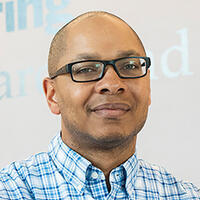
Mark Lewis
2026 INFORMS President
Mark E. Lewis is the Maxwell M. Upson Professor of Engineering at Cornell University and is the first African American elected as INFORMS president-elect.
Lewis has served INFORMS in numerous other capacities, including co-founder and president (twice) of the organization’s Minority Issues Forum. He is a past chair of the INFORMS Applied Probability Society and has served on several other INFORMS committees. Lewis has also earned multiple INFORMS awards and honors for his tireless service and extensive contributions to INFORMS, including being named to the inaugural class of the INFORMS Minority Issues Forum fellows.
Professionally, Lewis’ research and expertise is primarily in the dynamic control of service systems. He applies his work in routing to transportation systems, control of inventory systems and allocation of interswitch handoffs in wireless communication. He is also passionate about solving general problems in resource allocation. During his current sabbatical from the School of Operations Research and Information Engineering at Cornell, Professor Lewis is working as an Amazon Scholar on pricing and logistics.
Related Episodes


Episode Transcript
Ashley Klimp:
Welcome to Resounding the Human, the podcast by INFORMS. I’m Ashley, and in each episode, we explore how analytics, operations, research, and AI are transforming our world from healthcare and policy to business and beyond. Earlier this year, we kicked off 2026 with INFORMS President Mark Lewis, talking about his vision for the year ahead. Now, just after the Informs Analytics Plus Conference, his first major event as president, we’re checking back in to reflect on what we’ve seen so far, what stood out and what’s still ahead for the Informs community. I’m so pleased to welcome back Mark Lewis, 2026 Informs President and Professor at Cornell University. Since we last spoke, Mark has stepped fully into the role and helped lead one of our first major gatherings of the year at the Informs Analytics+ Conference. Today, we’ll talk about what he’s seen so far, what’s energized him most and how that’s shaping the path forward for the rest of 2026.
Mark, welcome back to Resounding the Human.
Mark Lewis:
Thank you so much and thanks for having me. It’s good to see you.
Ashley Klimp:
Mark, when we last spoke, you were just stepping into the presidency. Now you’ve had a few months in that role and your first major conference behind you. What has this experience been like so far?
Mark Lewis:
Well, it’s been a whirlwind, I’d say. I think I sort of knew because Informs presidency is only a year, you’re only a president for a year, you’re president-elect, president and then president and past president, so three years stint in total, but president for only one year, I knew I had to get the ground running. What I wasn’t sure about is that I didn’t know about that the ground was actually moving below you as well. So if you’re not going fast enough, you will face plant. So that’s something I wasn’t really prepared for, but that’s exactly what happened. So that’s good. It’s been a lot of fun. It’s also interesting to see that some of your vision is sort of taking shape. You have an idea, it’s really, really blurry. You can think of it as a blurred Zoom background, if you will. As you move through the year, it gets a little bit more clarity and hopefully think some of those things reach fruition by the end of your time as president or maybe even past president.
But I’m seeing that now and that’s really been kind of exciting to do. I guess we’ll get into more details later, but that’s really neat.
Ashley Klimp:
All right, Mark, let’s start with Analytics+. What stood out to you most? Any moments or themes that really captured the spirit of the conference for you?
Mark Lewis:
Yeah. So earlier, you said I led the conference and what I realized it’s not really true. I mean, led is, I guess maybe in big quotes, I’ll put air quotes up because it’s run so smoothly by Informs that they just tell me what to do. I’ve sort of been walking around and they say, “Mark, here’s what you have to do this and you have to do that and here’s the person to meet.” So it’s really, really being led through things much more than me leading anything. That’s fine, which just makes it much easier for me, but things stick out as they always do in these conferences. Two things jump up the page. The first one is going to be true every year, so this is not going to be consistent just for me, but the LM competition always just blows me away. It’s amazing to me how much we’ve done for the analytics community, just being ORMS professionals and how much can be done and how much could be done in the future.
So that’s just, wow. And every time I go to that conference, I’m newly impressed. Now don’t ask me about the details of who said what and who did what. I just remember Microsoft won. So good for them. And every single finalist was absolutely amazing. The second thing I’ve really, really appreciated is I’m starting to see people either, let’s say, adopt or appreciate for now, let’s say, the Informs Analytics framework.
It’s starting to codify itself in the land of decision making, which is really nice to see. I think that the data rich environment that we’re living in now, and it’s even accelerating, we’re going to really need to be smart and excited about how we make decisions, how we use data, how we remind ourselves what data has been used so far and what we can do with the incoming bits of data. So I do think that the ORMS community has a huge place to have an influence there and I saw that in the conference.
Ashley Klimp:
So I just want to chime in as someone who gets to talk with each of the teams for the podcast series and the lead up to the conference, not that I’m not excited every year, but this year I was really excited for the competition. And as someone who can be included in that group of telling you what to do and what to say at the conference, I appreciated your cooperation very much.
Mark Lewis:
Thanks. I have to tell my wife that. I listen to what I’m told. There you go. See if she agrees.
Ashley Klimp:
Did anything from the event surprise you or perhaps even shift your thinking about where the field or informs is headed?
Mark Lewis:
Yeah, I guess this is a good question. I think I would say nothing really surprised me. I’ve been to several of those conferences before and so I just get reminded of the passion of the practitioner community when I go at hard. I’m an academic. I’ve been an Amazon scholar for a couple of years, but for the most part, my career has been in the academy. And so I just get reminded that there is a space between what we academics do and what practitioners do and there’s a bridge that can be built between the two. I think a very good one, but still it’s always good to go see and, oh, this is what I’m missing as an academic and the practitioners are doing an amazing job at that. So that is not surprising, it’s just a reminder. And I do think that we’re on the cusp of seeing that the chasm close a little bit where the bridge will be shorter and shorter each year and I’m a bit of a cynical optimist, so that’s kind of what keeps me going.
So it motivates me. My cynicism motivates me, my optimism keeps me on track and I’m really excited about what can happen in the future.
Ashley Klimp:
If a cynical optimist is also a realist, so that’s not such a bad thing.
Mark Lewis:
Yeah, fair enough. All
Ashley Klimp:
Right. In our last conversation, you shared your vision for Informs in 2026. How are those priorities all taking shape so far?
Mark Lewis:
Yeah, so we have five ad hoc committees, I’m an ex officio member of two of those committees. So the AI committee and the quantum computing committee are sort of carry on. So Dave Hunt is sort of handling those and the past president, Julie Swan is the head of the Influence Analytics Framework committee. So those are running on their own, but the two newest ones that I implemented, the Humanitarian Operations and Logistics Committee and the Energy Sustainability Committee had their first meetings earlier this month. And so that’s really been exciting to see them get started and I’m looking forward to what they can do so that’s been really cool.
Ashley Klimp:
So Mark, are you seeing early momentum in any particular area, member engagement, new initiatives or collaboration?
Mark Lewis:
So I already mentioned two committees, the two sub committees. Those are new and exciting to see where those go. I’m also starting to see, I don’t know if you knew this, I spent some time with a former student of mine in Taiwan, went to visit for about a week and a half and I learned a lot about what some of the people from the international community are seeing and I’m starting to see a vision as to how that can also be impactful at the influence level. So have some ideas about how we can move that forward. I know we’re planning to have a couple of conferences in the future in Asia. I could see that expanded worldwide to see what we can do. That’s kind of exciting too.
Ashley Klimp:
So have you heard anything or gotten any helpful feedback from members that’s helped refine your approach as president?
Mark Lewis:
Yeah, I guess I’ll return to that visit to Taiwan. I think I learned, I don’t know if they told me this, but what I learned is that people in the influence community don’t see us as just meetings and just publications. It’s really the whole thing that they see. And so that’s something I’m sorry to say, I’m not sure I appreciate it. So I think, oh, the meeting is coming up in November or October. This is when I go to do the informs thing or I’m not writing a paper, this is what I need to use it. Actually, it turns out that just think about how we created editorial boards. Even the creation of editorial boards influences who’s going to attend the conferences. And so these sort of things are sort of interwoven together to make what really makes influence what it is And I’m not sure I appreciate it until I became president.
It’s maybe sad to say, but it’s
Ashley Klimp:
True. Now that the Analytics Plus conference is all wrapped up, looking ahead, we have the healthcare conference and then the annual meeting on the horizon. What are you most excited about with either or both of these two events?
Mark Lewis:
Well, the healthcare conference is coming up in a couple of months. I’m not going to be able to make it, but I wish I could. It’s an area that’s near and dear to me. I’ve written several papers in this space. And so that I’m hoping what I hear back is that the people that did attend had an amazing time and got together and moved the field forward. This is what I hope happens. The annual meeting, I’m always excited to see my group of friends. We’ll get together, talk about some of our work over the last several years. This is true for any meeting. And even as president, that’s true. One thing that I really would like to do as president, I have to talk to Grace to see if this show let me do it is there’s some places where I view it as my home when I was not president of INFORMS, and I want to make sure to make those meetings.
So the minority issues for me is one, the Applied Probability Society is another. And I fell down last time I missed some of those meetings and I want to make sure that I go as president.
Ashley Klimp:
I’m sure we can definitely make that happen.
Mark Lewis:
Well, now I put it on the podcast that Grace is going to make it work.
Ashley Klimp:
The pressure is on.
Mark Lewis:
She’s going to make it work.
Ashley Klimp:
So the Healthcare Conference and Annual Meeting are two unique and independent events, but how do you think these upcoming events build on the momentum from Analytics+?
Mark Lewis:
Yeah. So I think first of all, any conference just gives you a little boost. So it reminds you why we do what we do and the impact we can have. And hopefully when we sit in our offices in our little silos, we are also looking outside and taking advantage of what’s around us. But I think every meeting does exactly that. It just brings us together with people that are kind of like- minded, maybe from different constituencies and expands our horizons. So that’s what I think about in any conference, that’s what I hope to see
Ashley Klimp:
Happen. For members thinking about getting more involved, what would you say to encourage them to jump in? Maybe not straight into the INFORMS presidency, but in another opportunity.
Mark Lewis:
Yeah. So I think the answer to the question is first if you … So I think I mentioned maybe last time we spoke, but first it’s you find two communities. One of them is sort of your academic or where your practices community is first. So for example, for me was the Applied Probability Society, that’s what I do. And then the second place you should find is your affinity community. If you happen to have one, you don’t have to, but if you do, that’s great. And so I spend my time on the Minority Issues Format, as I told you before. So what I would say about that is after you’ve done that to get more involved, figure out who the officers are and they will absolutely put you to work and maybe put you on a path toward becoming an officer in one of those communities.
That’s how you get started. If I were to do it again, I would do exactly that way.
Ashley Klimp:
Excellent advice. All right, Mark, I’m sure you’ll remember from our first interview, our Ask AI segment where we ask AI a question and I get your take on the response. And I think this question’s really good, especially coming out of the Analytics Plus conference, which is definitely more industry focused. All right, here’s today’s question. What is the biggest mistake organizations make when trying to build a strong professional community? And AI’s response? The biggest mistake organizations make is focusing on structure instead of connection. They build programs and platforms but overlook the human experience of belonging. Strong communities aren’t just well organized, they’re participatory, inclusive and shaped by their members. People stay when they feel seen, heard, and able to contribute. In short, community isn’t something you deliver, it’s something you cultivate. So Mark, I’d love to get your reaction to that.
Mark Lewis:
That last part is basically how I’ve built my life’s work. So as an assistant professor, I wrote a career grant, we all do. I mean, it’s not as secret. And my career again was on parallel processing networks and building a community of underrepresented minority researchers. And so one might think that doesn’t make any sense, Mark. Those two things aren’t connected. It turns out that those two disparate things are exactly how I live my life. I certainly spent my time thinking about the technical pieces of decision making in queuing networks. That’s certainly a part of it, but my time spent with the community at Informs is what really pushes me forward. And that’s not far off from what Informs is offering for anybody. So that’s the Informs brand, if I consider it that way.
Ashley Klimp:
Very well said.
Mark Lewis:
Yeah, I got it right. Who is?
Ashley Klimp:
You were in agreement with AI, which is always a good sign.
Mark Lewis:
Right.
Ashley Klimp:
All right, Mark, let’s wrap up our conversation with a few rapid fire questions. So just say the first thing that comes to mind. Favorite moment from Analytics Plus.
Mark Lewis:
Yeah, I have two.
Ashley Klimp:
That’s okay. You can do two. You can do two.
Mark Lewis:
Posture, that’s with the little parents around it. Moments from- Favorite
Ashley Klimp:
Moments from Analytics Plus. There we go.
Mark Lewis:
So I got to meet one of the cabinet members from India and the fact that the person just came for the Analytics Plus conference was just very gracious and kind to spend his time there. I met him and his wife, and it’s just really, really cool. So that was really neat. So that’s part A. And then part B, I found this, they asked me to be on an Informs Analytics … No, sorry, the Informs Analytics Framework panel. So it’s me and basically some practitioners talking to practitioners. And although like I said, I’ve worked with industry people and I also have an Amazon connection, it was eye-opening to be there and to sort of be humbled a bit. And I really liked that. So they were saying, “Hey, Mark, this is what we do. Here’s what you don’t do and why aren’t we working together to make these things connect?” And that was really neat.
I liked that.
Ashley Klimp:
I’m glad we expanded it to moments instead of moment, because those were two really terrific ones. All right. One word to describe the Informs community right now.
Mark Lewis:
Right now awesome
Ashley Klimp:
Approved.
Mark Lewis:
I don’t know if I’d like that answer, but that’s my answer. Let me just expand a litle bit if you don’t mind. The thing I think about is that what I’ve learned, I’m taking community in the broadest sense. So I don’t mean just the practitioners and it’s just the membership. I’m also talking to people that work at Informs. So I could have used Dedicated if I just looked at the people, if I said the people from Informs, including all the volunteers, Dedicated would be a natural response, but then I wouldn’t encompass the people that I’ve met outside of that group, which are also dedicated, but really just amazing at what they do. And I’ve been impressed is expanding my horizons a bit as opposed to just being a probabilist. So I really like that. Awesome.
Ashley Klimp:
I like Awesome too. We also would’ve accepted fabulous, but I think awesome. It captures everything that you were trying to express in one word. Thank you. Is there a topic or trend you’re especially excited about?
Mark Lewis:
This is another one of these things that’s going to be two, but maybe not really two. So I like the idea of building a cohesive community, but at the same time, I think the community is expanding. And so I want to say cohesive and expanding. Those are the two things I’m really excited about doing. I mean, there are people that out that are outside the community right now that should be brought into the fold and I really think we can do it. So yeah, that’s what I’d say.
Ashley Klimp:
All right, Mark, this next question might make you some enemies. Coffee or tea during a conference day?
Mark Lewis:
Oh, I’m going to go with since I … Okay. So coffee is the answer, but it may change. To me, this is the … Oh golly, I can’t even think of the name now. Politician’s answer because I drink coffee, I don’t drink tea. Mon doctor tells me I have drink less coffee, so I might start drinking more tea. So there you go. Coffee for now, next year maybe they’d be tea.
Ashley Klimp:
Coffee, but open to tea. Okay.
Mark Lewis:
Tea, that’s right. That’s right. I’m in favor of tea as well. So don’t beat me up British colleagues of mine.
Ashley Klimp:
Spoken like a true president. Answer the question you want to answer. All right, Mark, what’s one thing you always make time for no matter how busy things get? Yeah.
Mark Lewis:
To get me again, one thing’s not going to do it. I have two daughters. So if you let me say kids, my kids, then that’s one thing, then fair enough. So I’m going with that. But otherwise it’s always me with the two kids, Eaton and Willow. Whenever they call me, that’s when I stop and do what they need me to do.
Ashley Klimp:
Terrific response. I had
Mark Lewis:
Four kids, it’d be four of them, I guess.
Ashley Klimp:
Yes, yes. And there’d
Mark Lewis:
Be four
Ashley Klimp:
Responses. Yeah. We’ll count that as two different responses because they’re two very unique individuals who-
Mark Lewis:
If you met them, you would absolutely agree. 100% that’s true.
Ashley Klimp:
Mark, it’s been so great to check back in and hear how your vision for 2026 is already taking shape. And once again, I’m still fangirling like I was after our first interview. What stands out most to me is the momentum, not just in the working being done across analytics and operations research, but in the strength of the community driving it forward. And maybe that’s the real takeaway here behind every model, every insight, every breakthrough are people, people asking better questions, building connections, and showing up to move the field and each other forward. To learn more about upcoming events like the Healthcare Conference and the Informs annual meeting, be sure to check out the links in our show notes. Mark, thank you again for joining us and thank you to our listeners for being a part of this community.
Mark Lewis:
Thank you so much. It’s good to see you.
Ashley Klimp:
All right. I’m Ashley and this is Resoundingly Human.
Want to learn more? Check out the additional resources and links listed below for more information about what was discussed in the episode.
Mark Lewis, Cornell University